
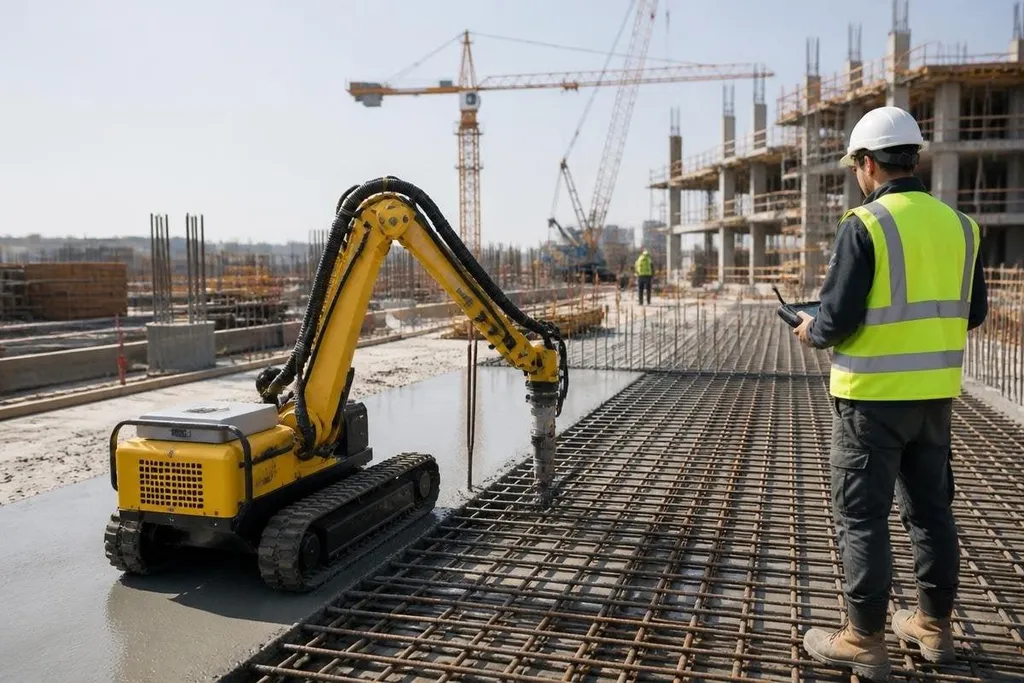
A mega construction project can run for years, use many specialist crews, and repeat the same physical task thousands of times. Robots help most when work is repetitive, measured, or unsafe for people, while human teams still handle planning, judgment, and repairs.
Quick read
- Robots can scan sites, move materials, place parts, and inspect finished work.
- The biggest gains come from repeatable tasks with clear digital plans.
- Poor site access, changing conditions, and weak data can stop a robot quickly.
Where robots fit on a large site
Construction robots usually fall into four working groups. Mobile robots carry tools or materials. Robotic arms place or finish parts. Inspection systems collect images or measurements. Software connects those machines to site plans and work records.
Site robots may use LiDAR, cameras, or other sensors to map their position. LiDAR sends out light pulses and measures their return, helping the robot build a map of nearby walls, floors, and equipment.
The system then compares its position with the planned work area. That process matters on a large project because the worksite changes as crews add floors, pipes, walls, and temporary structures. A map that was correct in the morning may need an update after lunch. Robots need fresh site data and clear limits before they move or act.
Repeated work is the clearest use
Robots suit tasks with a fixed path and a known result. Examples include drilling repeated holes, placing fasteners, tying rebar, laying bricks, spraying coatings, and scanning surfaces for defects. The robot does the same motion many times, while a person checks the setup and handles exceptions.
The benefit comes from repeatability. A machine can follow the same programmed path without tiring, but that only helps when the parts arrive in the right position and the plan matches the building.
Material movement is another practical use. An autonomous mobile robot can carry tools, panels, or supplies between marked areas. That can reduce walking for crews, but the site still needs clear routes, safe crossing rules, and a way to stop the robot when people enter its path.
Inspection work also suits machines. Inspection systems can capture images of concrete, steel, or pipe runs and attach those images to a location in the project model. That record gives supervisors a way to check work later, though the camera cannot decide every question about quality or safety.
That record matters when a project team compares a camera check with the work it supports. For that wider check, building-site robot reports can tie a machine’s claimed task to a named site, test date, and human review.
The limits are usually on the site
A factory gives a robot a fixed floor, known lighting, and repeatable parts. A construction site gives it mud, dust, weather, temporary power, uneven ground, and people moving through the same work area. Those conditions can affect sensors, wheels, grippers, and wireless links.
The robot also needs a task that can be described in machine-readable steps. A worker can look at a crooked opening and choose a new approach. A programmed system may stop, request a new path, or damage the part if that choice was never included in its instructions.
Safety adds another layer. Site managers need physical barriers, emergency stops, speed limits, warning systems, and clear responsibility for each machine. Training matters too. A crew must know where the robot can move, what it carries, and how to stop it.
Cost needs a full check. The purchase price is only one part of the budget. Site setup, transport, software, operator training, maintenance, spare parts, and downtime can change the result. One that saves labor on one task may lose money if crews spend hours preparing it each day.
A practical buying checklist
Before adding a robot to a mega construction project, check these points:
- Repeatable task: Can the robot follow the same motion for most of the work?
- Site condition: Will dust, rain, slopes, heat, or poor lighting affect its sensors?
- Input data: Are the plans, measurements, and work locations accurate enough?
- Human control: Can a trained worker stop the machine at once?
- Full cost: Does the budget include setup, service, training, and spare parts?
If several answers are weak, start with inspection or material movement before giving the robot a production task. Those uses can create useful records and expose site problems without placing the machine at the center of the build.
I'd fund a construction robot only after a small, measured trial proves that the task, site, and crew fit together. The next question for every project is specific: how many hours of paid work will the machine replace after setup and service are counted?